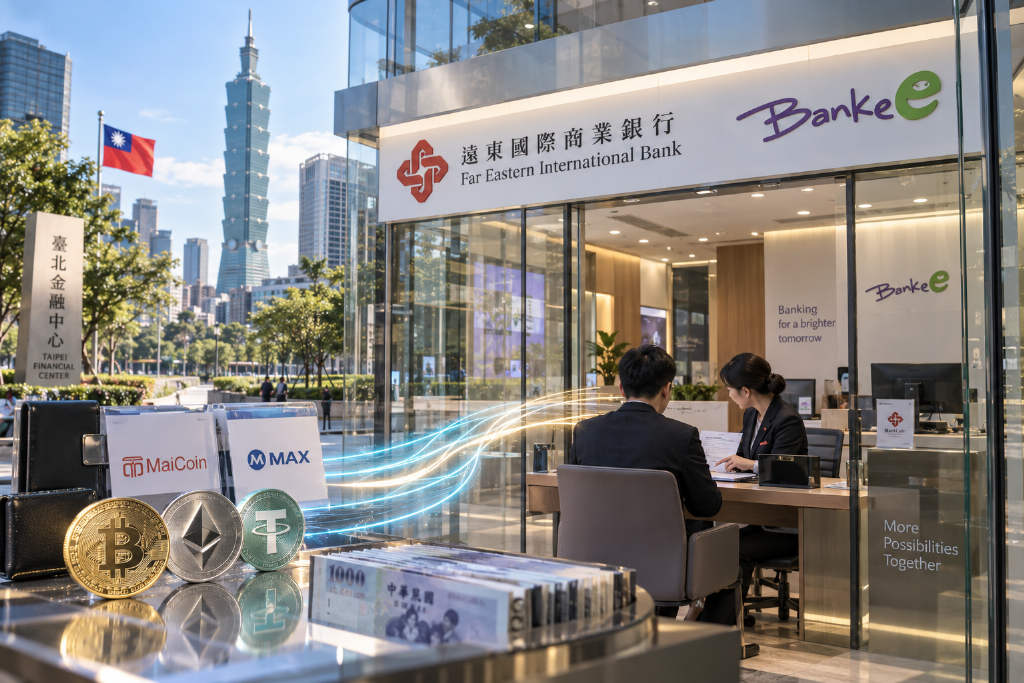
Far Eastern I2026-10-02 05:03:52Far Eastern International Bank’s Bankee launches crypto-backed income review loan, drawing contrast with AaveFar Eastern International Bank’s digital banking brand Bankee has introduced a revolving credit product called "Bi Xu Dai" that counts certain crypto holdings toward a borrower’s financial review. Under the public terms, applicants can use BTC, ETH, and USDT held in their own MaiCoin and MAX accounts, along with Taiwan dollar balances in those accounts, as part of the bank’s credit assessment for a New Taiwan dollar loan. The product carries a one-year term, allows borrowers to draw and repay flexibly, charges interest on a daily basis, and waives interest for same-day borrowing and repayment. It also comes with a NT$1,688 processing fee and a floating annual rate ranging from 3.45% to 15%, based on the bank’s time-deposit index rate plus a markup. Public materials say the final approved amount and the way crypto assets are counted remain subject to the bank’s review. ABMedia’s summary also highlights how the product differs from DeFi lending on Aave V3. Bankee’s loan is structured as bank credit underwriting that uses crypto as proof of financial strength, while Aave relies on overcollateralized on-chain borrowing, health factor monitoring, and liquidation when a position falls below required safety thresholds.50
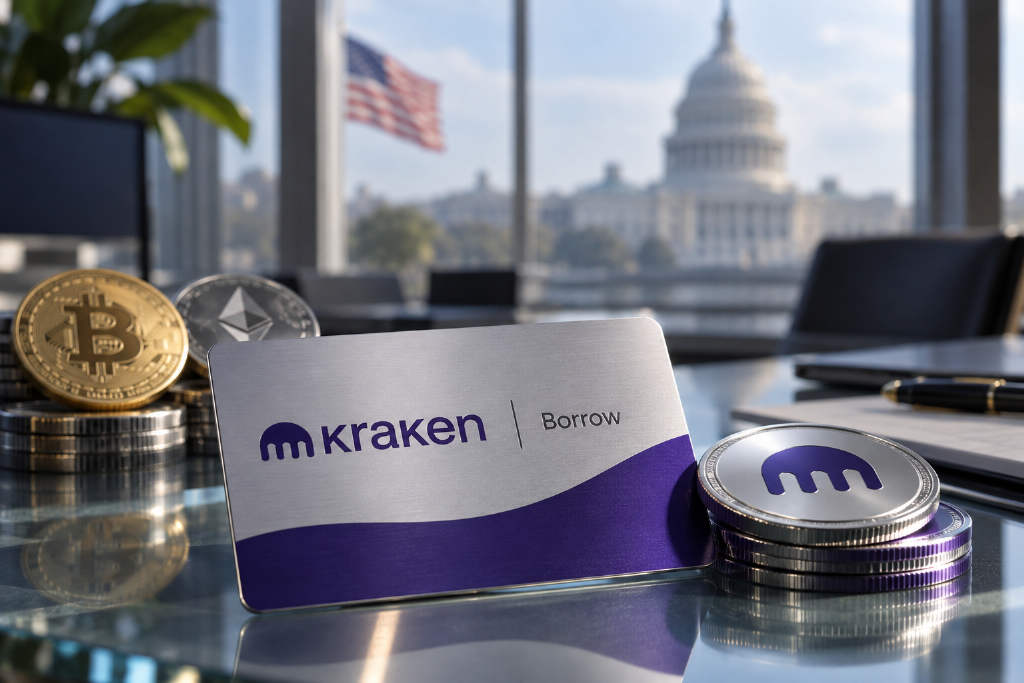
Kraken2026-10-01 18:01:25Kraken opens Kraken Borrow to eligible U.S. clients with up to 3x buying powerCrypto exchange Kraken said its lending product, Kraken Borrow, is now available to eligible clients in the United States. Under the offering, qualifying users can access buying power of up to three times the value of their eligible assets and use that capacity to purchase additional cryptocurrencies. Kraken said the product is designed to give users a leveraged trading option that can increase the size of their positions. The exchange added that clients must check the official website link for detailed eligibility requirements and the list of available assets. The update was shared through Kraken’s official account.40
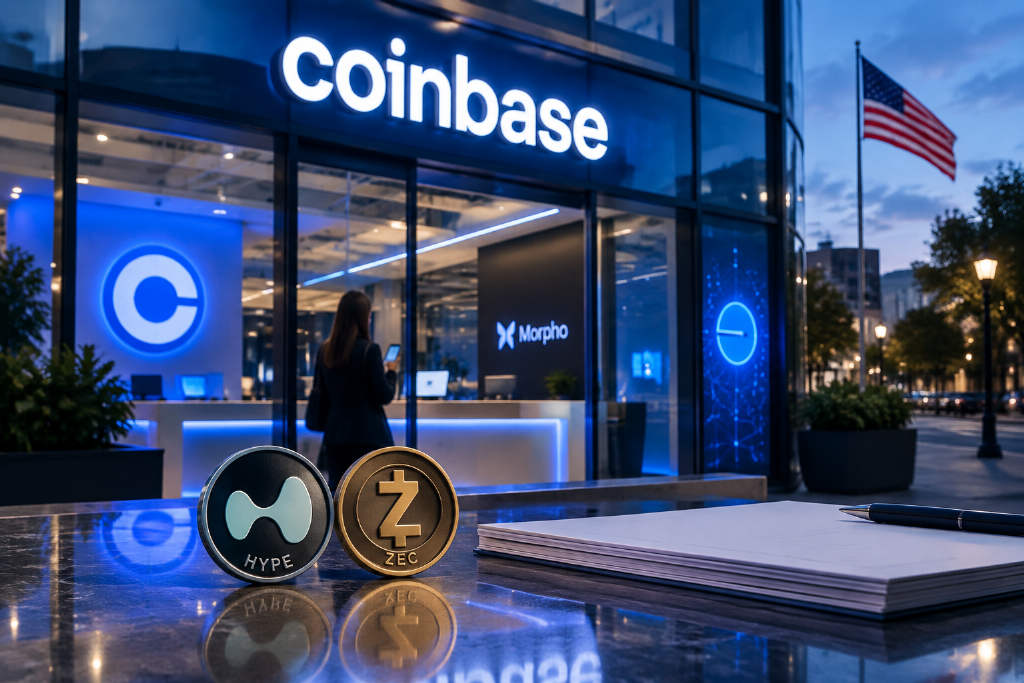
Coinbase2026-09-29 15:13:50Coinbase expands crypto-backed borrowing with HYPE and ZEC collateralCoinbase has expanded its crypto-backed borrowing service by adding support for HYPE and ZEC as collateral. Eligible users can borrow instantly without selling those holdings, with loan amounts of up to $100,000. The service is currently available to users in the United States, excluding New York state. Coinbase said the offering is powered by the decentralized lending protocol Morpho and runs on the Base network. The update adds two more assets to the collateral options available through the company’s borrowing product.240
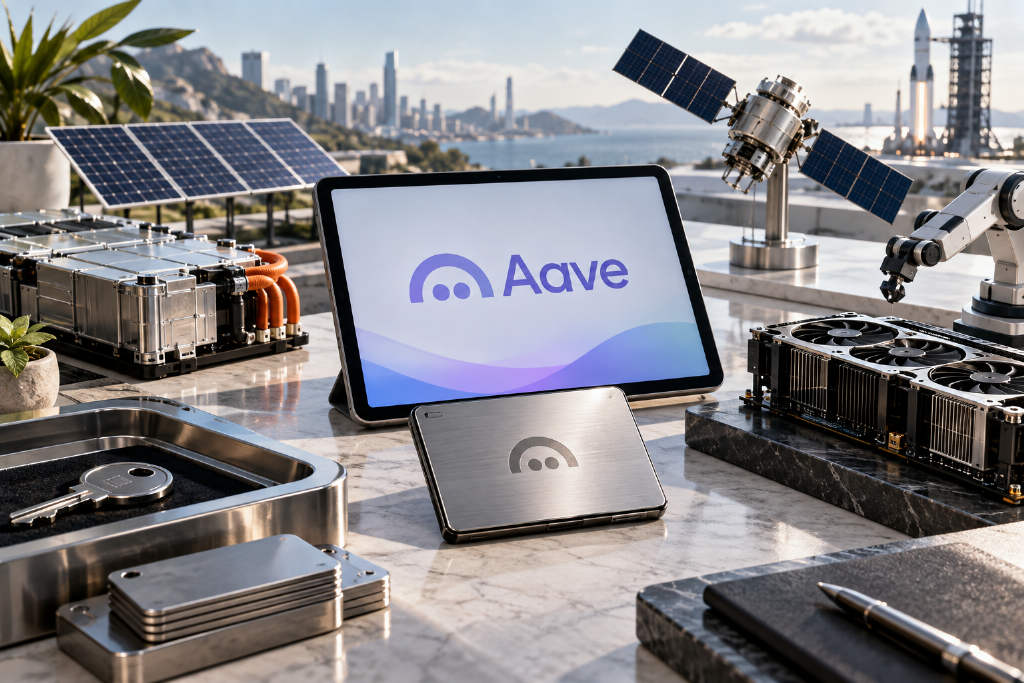
Aave2026-09-28 03:59:29Aave founder says protocol could expand into financing solar and space infrastructure assetsAave founder and CEO Stani Kulechov said the way to measure Aave’s potential market is by looking at the universe of assets that can be used as collateral. In his view, a broader collateral base creates more room for lending activity. Kulechov said Aave’s business could eventually extend to what he described as “abundant” assets, including solar, batteries, GPUs, robots, and space infrastructure. He added that this transition would continue through 2050. Aave’s goal, he said, is to help move that timeline forward by roughly a decade by providing financing for those assets. The remarks were made in a post on X.240
Kraken2026-09-26 06:03:41Kraken launches crypto-backed borrowing in 48 U.S. states with up to 3x buying powerKraken has rolled out Kraken Borrow US to eligible customers across 48 U.S. states, adding a new crypto-backed borrowing product to its domestic offering. The service lets users pledge supported assets as collateral and borrow funds to buy more cryptocurrency, with total buying power reaching as much as three times the value of eligible collateral. Kraken said the product operates on its regulated U.S. derivatives infrastructure and is available only to qualified customers. The company also said the service does not impose a fixed repayment deadline or a minimum payment requirement. Even so, users still face interest charges and liquidation risk. According to Bitcoinist, the launch comes as U.S. exchanges widen their product lineups after years of regulatory uncertainty. The report also noted that Coinbase has moved deeper into crypto-backed lending, while regulated derivatives products are expanding across multiple platforms.240
EBA2026-09-25 20:13:43EU Banking Authority Pushes MiCA Review to Cover Crypto Lending, Eyes Leverage Caps and DeFi Protocol CertificationThe European Banking Authority on Sept. 24 urged the European Commission to consider bringing crypto borrowing and lending within the scope of Markets in Crypto-Assets regulation, or MiCA, including cases where licensed crypto firms give customers access to DeFi lending protocols. MiCA does not currently regulate crypto lending, though it already bars stablecoin issuers and crypto-asset service providers from paying interest on stablecoins. The EBA said stablecoin lending can still generate yield for holders and may create regulatory arbitrage risks. In its written response to the Commission’s ongoing MiCA review, the regulator said crypto lending is increasing in both volume and value, citing a joint report with the European Securities and Markets Authority published in January 2025 that found the activity was being intermediated in at least 16 member states. The EBA asked the Commission to study two possible changes: adding brokering of crypto borrowing and lending to MiCA-regulated services, and imposing requirements on crypto-asset service providers that connect clients to DeFi lending protocols. Options listed by the EBA include suitability tests, leverage caps for some or all users, expanded disclosures, warnings that activity on truly decentralized protocols is unregulated, and a certification framework for DeFi lending protocols. The consultation closes on Sept. 30.310
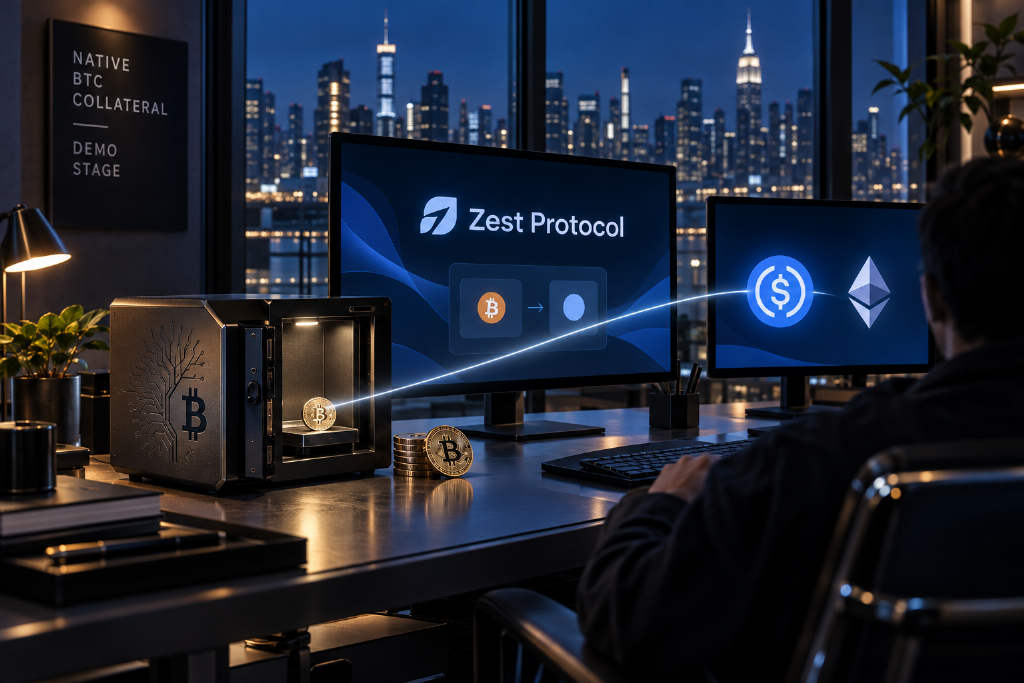
Zest Protocol2026-09-25 13:33:45Zest Protocol launches mainnet demo for native BTC-backed USDC borrowing on EthereumZest Protocol has rolled out a mainnet demo that lets users post native Bitcoin as collateral and borrow USDC on Ethereum without wrapping or bridging their BTC. The setup uses a self-custodied Taproot vault on Bitcoin, while smart contracts on Ethereum handle the lending flow. Zest said the bitcoin deposited into the system remains native BTC rather than being turned into another token representation on Ethereum. For now, the release is limited to a demonstration environment rather than an unrestricted production launch, with collateral capped at 0.001 BTC per wallet. The project also said its architecture is designed around BitVM-based verification, which it says could eventually allow lending events on Ethereum to be verified on Bitcoin. The update was cited by Techub, referencing Bitcoinist.350
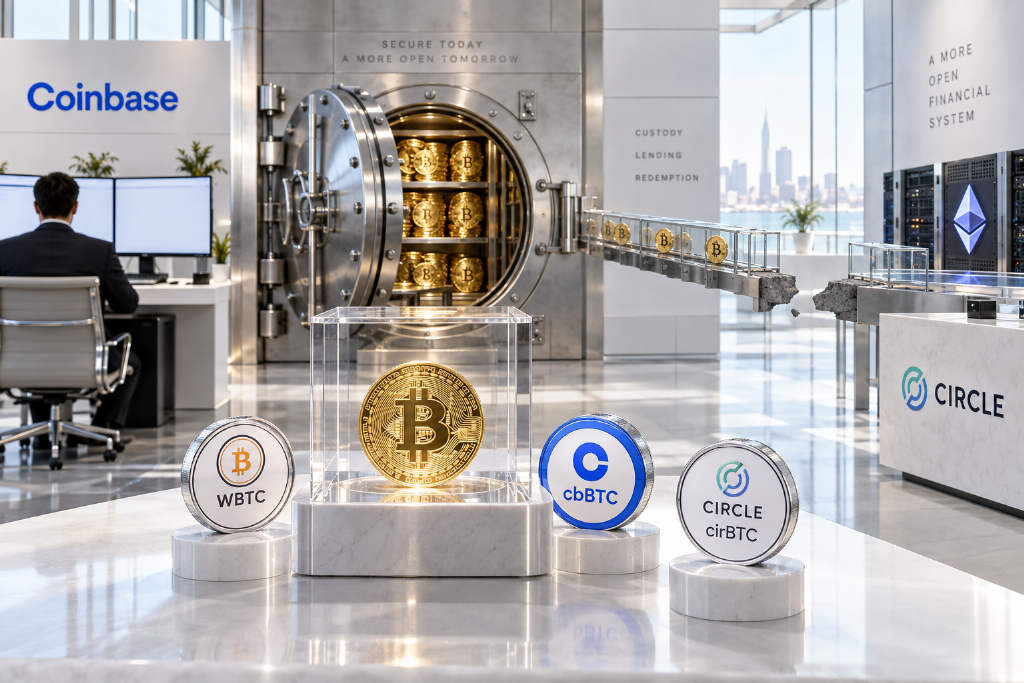
Bitcoin2026-09-10 05:41:13Using BTC as Loan Collateral Doesn’t Mean You Still Hold Native BitcoinBitcoin holders who need cash do not always have to sell. They can post BTC-linked assets as collateral and borrow against them, keeping exposure to Bitcoin’s price while unlocking liquidity. The catch is that many crypto lending applications run on other blockchains, so users often rely on custodial wrapped Bitcoin products such as WBTC, cbBTC, or Circle’s cirBTC rather than native BTC itself. That shift changes the risk profile. The borrower is no longer relying only on Bitcoin, but also on a custodian to hold the underlying coins, on redemption rules to work as promised, and on a lending protocol to function correctly. Even if a wrapped token is fully backed, redemption access, settlement delays, regional restrictions, and liquidity across supported markets can all determine whether that token is actually useful as collateral. The article examines how minting and redemption work, why wrapped tokens still track BTC downside, how liquidations can force users to lose Bitcoin exposure without selling voluntarily, and why product differences between WBTC, Coinbase’s cbBTC, and Circle’s cirBTC matter. The central question is not whether a token says it is backed by Bitcoin, but whether the holder can reliably get Bitcoin back.980